How to Recognize a Meadow as Shared Habitat
Learn how to recognize a meadow as shared habitat by reading plants, animal signs, and human use, then choose a thoughtful next step for its care.
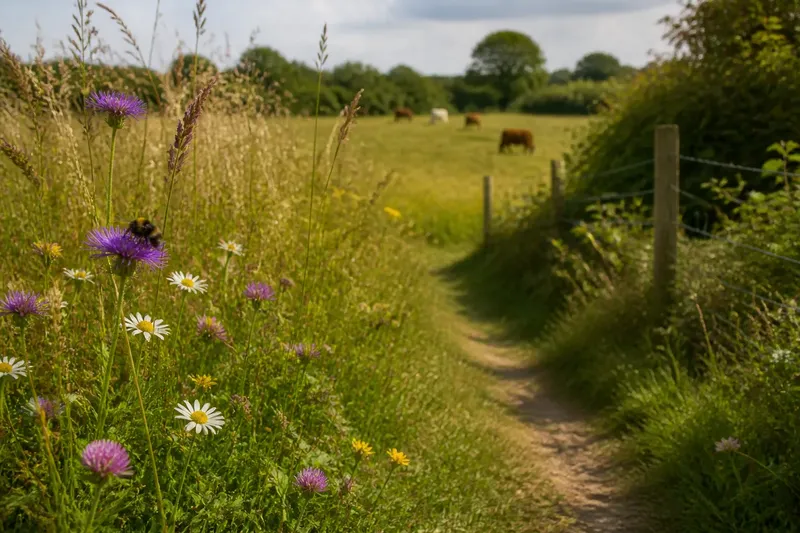
How do you recognize a meadow as shared habitat rather than empty ground? Start at its edge: note the flowering stems, a worn footpath, and the fence that separates grazing land from a strip of scrub. Each detail can point to wildlife needs and human choices sharing the same place.
Read the Meadow
A close-mown field can look tidy from a path. A meadow with grasses at different heights, flowering patches, bare ground, and shrubs along its edge may look less orderly, but that variety can offer different kinds of food and shelter.
Pause before deciding what the place needs. From a public path or another permitted vantage point, note open grass, damp areas, flowers, scrub, trees, and routes people use. A quick visual survey is not a full inventory; it helps you ask better questions than “What could go here?”
Look for Plant Structure
Short turf, tall stems, and standing seed heads create different conditions. Flowers may offer nectar and pollen to visiting insects, while grasses can shelter small animals and provide seeds for birds. Which relationships matter depends on the plants and wildlife at that site.
Look beyond color. Are stems at several heights? Do flowers appear across the growing season, or mostly in one flush? Is part of the vegetation left standing after a cut? These clues help explain how the meadow functions, though they cannot identify every species or need on their own.
Edges can matter as much as the open center. Shrubs may offer cover to some animals, while species that use open ground may benefit from clear sightlines. Neither a scrubby edge nor a bare center is automatically best; local conditions and wildlife needs guide the judgment.
Separate Signs from Conclusions
Small or fast-moving wildlife is easy to miss. From a distance, watch for insects visiting flowers, birds feeding among stems, or animals crossing between cover. Listen for calls, but do not approach nests, dens, or sheltered spots that may be in use.
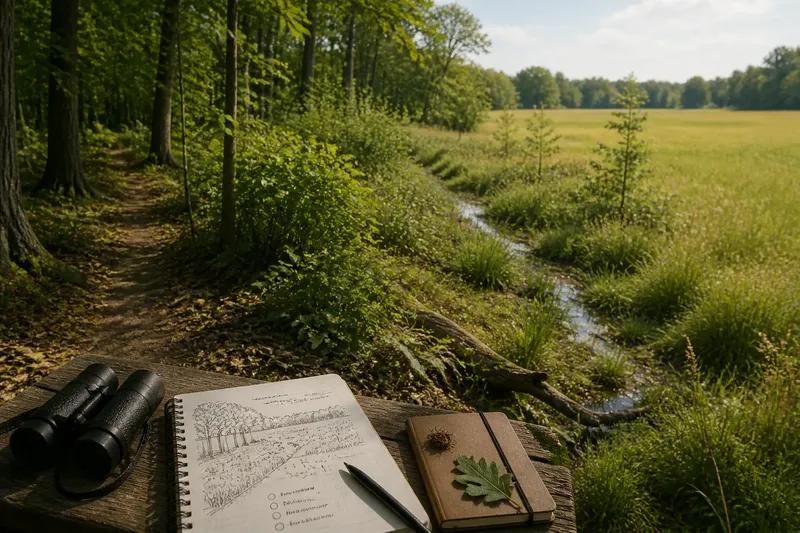
Write down what you observe separately from what you infer. “A small bird carried grass toward the hedge” describes an observation; “there is a nest in the hedge” is an unconfirmed conclusion. A notebook, phone camera, or field guide can help keep the distinction clear.
Say a volunteer notices a bee visiting purple flowers beside a recently cut strip. They record the place, date, and visible activity, then note that the bee’s reliance on the flowers is unknown. The resulting observation gives a site manager a specific reason to look again, without claiming more than the volunteer saw.
Map Human Use
People may walk a path, graze livestock, cut hay, or manage invasive plants. These activities can maintain open conditions, disturb wildlife, or do both, depending on where and when they happen. A gate, fence, mown strip, or management sign offers a clue, not a complete explanation.
If a practice is unclear, ask the landowner, site manager, or local conservation group about its purpose before proposing a change. Cutting may help keep woody growth from taking over; leaving selected patches uncut may preserve flowers, seeds, and shelter. The right arrangement depends on the site and its goals.
Choose a Response
Match your next action to what you can observe and to your role. Visitors can stay on marked paths and follow local rules for dogs. Volunteers can join a managed workday or help with an agreed survey. Land managers can consider whether current mowing, grazing, or scrub management fits the site’s habitat needs.
Use these checks to turn a general wish to protect a meadow into a specific question or action:
- Flowering plants: Check whether flowers appear in several patches or only one spot. If they are spread across the meadow, ask how management can retain those patches; if they are confined to one edge, ask the manager whether that edge can be observed and protected from unnecessary disturbance.
- Vegetation height: Check whether stems are uniformly short or vary in height. If the whole area is short, ask whether a varied cutting pattern suits the site; if tall and short areas coexist, note their locations before suggesting any change.
- Animal activity: Check for feeding, movement, or calls from a distance. If activity is visible, record it and avoid approaching; if signs are unclear, leave identification to a qualified surveyor rather than disturbing the area.
- Ground and water: Check for damp patches, bare soil, or visibly compacted routes. If a feature overlaps a path, ask the site manager whether access can be directed around it; if it lies away from routes, record its location and ask how it relates to the habitat.
- People’s routes: Check where paths, gates, and working areas meet habitat features. If a path concentrates foot traffic near a sensitive-looking patch, ask the manager whether a route adjustment is appropriate; if routes avoid that patch, keep using the marked access.
- Management evidence: Check for recent cutting, grazing, or removed scrub, and look for signs explaining the work. If the purpose is stated, compare it with the habitat features you recorded; if it is not clear, ask the responsible manager before recommending a different practice.
These checks are a starting point, not a substitute for specialist identification or site planning. Specific observations let a conservation group discuss which features are present, what pressures may affect them, and whose knowledge should guide a response.
Meadow Habitat Questions?
Does a meadow need to look wild?
No single appearance defines useful habitat. Grazing or cutting may help keep some meadows open, while selected undisturbed patches can retain flowers and cover.
Should every meadow be left uncut?
No. The appropriate management depends on the site’s plants, wildlife, and uses. Ask the land manager how cutting and uncut patches fit the site’s goals.
Can one visit reveal a meadow’s habitat value?
One visit can reveal useful features, but it may miss seasonal plants or animals active at other times. Treat your notes as a snapshot, not a complete account.
Keep the Shared View
Recognizing a meadow as shared habitat does not mean choosing wildlife over people or leaving every patch untouched. Plants, animals, and human practices shape the same place. Look for varied stems, flowering edges, worn routes, and signs of management before deciding what might be missing.
For meadow habitat, the practical next move is modest: name what you saw, mark where you saw it, and distinguish observation from inference. Then bring a clear question to the people responsible for the land; that gives any proposed care a useful starting point.