The Night Shift in a Pond: What Changes After Sunset
Pond wildlife after sunset follows a different rhythm: learn which sounds, movements, and viewing choices fit your pond and observation goals.
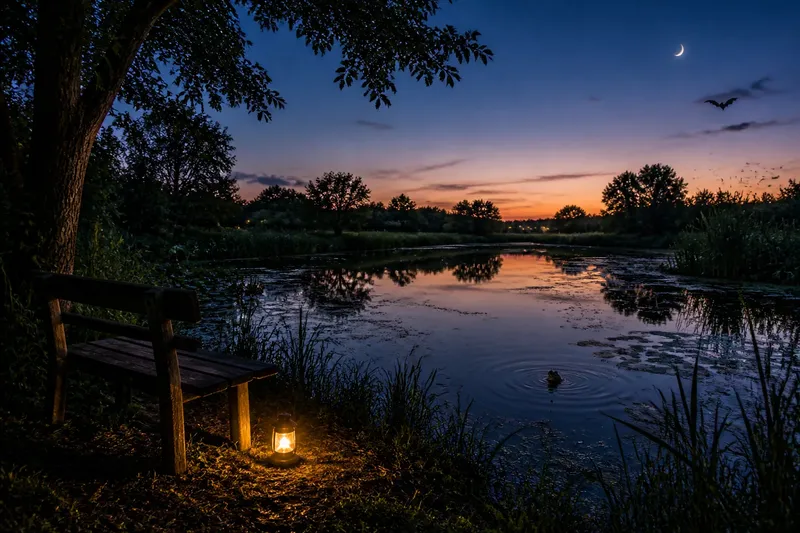
What changes at a pond after sunset—and should you watch, listen, or leave the shoreline alone? Pond wildlife after sunset follows a nightly rhythm, not a dimmed version of daytime. Darkness alters what animals can detect, where they can move, and which cues guide their decisions. The best way to observe depends on the pond, the weather, and what you hope to notice.
Choose your kind of night
Start by sorting the situation, rather than assuming every pond becomes busy in the same way. A small garden pond, a marsh, and a shaded woodland pool offer different combinations of water, cover, insects, and sound. Even one pond can shift from quiet to lively as wind drops or rain passes.
- If you want to hear activity: Choose a calm evening and stay still at a respectful distance. Listen before using a flashlight; frog calls, insect stridulation, and the soft disturbance of water can be easier to distinguish when your own movement stops.
- If you want to see movement: Look for a safe, familiar viewing spot with an open sightline, then let your eyes adjust. A low light may help you orient yourself, but sweeping a bright beam across the water can disrupt animals and make your own observations less useful.
- If the pond is beside a busy path or road: Observe from a quieter, established access point, or choose listening over close viewing. Foot traffic, headlights, and voices can change the setting you are trying to understand.
- If the night is windy or rainy: Treat the surface and soundscape as changing conditions, not as evidence that animals have disappeared. Wind masks calls and roughens reflections; rain can add its own taps and ripples.
- If you are unsure about local wildlife or access: Check posted rules and ask a local wildlife organization or land manager where observation is appropriate. Keep to public or permitted access.
For example, say you arrive at a neighborhood pond on a breezy evening hoping to hear frogs. Instead of circling the bank with a light, you settle at a permitted bench, face away from the path, and listen through a lull in the gusts. The expected observable result is not a promised chorus; it is a clearer chance to separate nearby calls from wind and passing noise.
Darkness changes the cues
At night, sight still matters, but it no longer carries the same information for every animal. A frog may rely on calls to locate potential mates or competitors. A bat can use echolocation to detect flying insects and obstacles. Some insects respond to sound or chemical signals, while animals with good low-light vision can make use of faint contrasts. The pond is not silent or invisible; its cues are redistributed.
Water reflects whatever light is available, but a reflection is not a reliable picture of what lies beneath it. A small ripple may come from an insect touching the surface, a falling leaf, or an animal moving below. Watch how the disturbance changes and where it travels, rather than assigning a cause at once.
Sound carries a different kind of uncertainty. A call can seem close when it comes from across open water, and overlapping calls can hide individual voices. Wind, nearby traffic, and the shape of banks or buildings also affect what reaches you. If you cannot locate a caller, record the sound as present without deciding which animal made it.
Follow the nightly rhythm
For many pond animals, night offers a shift in opportunity. Some amphibians become more active after dark, when cooler conditions or reduced exposure can suit movement across wet ground. Insects may gather near water or take flight, drawing predators that hunt above the surface. Fish may feed or move at times that differ from their daytime patterns. These are broad tendencies, not a schedule shared by every species.
The rhythm can change over the course of a single evening. A frog’s calling may rise, fade, then resume; insects may become audible after the air settles; a feeding animal may pass briefly and leave no clear sign of its presence. The sequence depends on species, season, temperature, rain, wind, and the pond’s surroundings.
That variation is useful information. If a familiar pond sounds different on two visits, note conditions before concluding that its wildlife has changed. A cold snap, a dry spell, a newly active chorus, or a noisy road can alter what you hear without making the whole pond’s animal community obvious to a visitor.
Match the method to the goal
Choose an observation method that answers a modest question. If you want to know which sounds begin after dusk, make a short sound log. If you want to see whether activity occurs at the water’s edge, watch a fixed section of bank rather than scanning the entire pond. If you are simply trying to notice how the place feels at night, sit quietly and describe what changes in the sound and surface.
A useful note records the conditions as well as the observation. Write down whether the air was calm or windy, whether the surface was smooth or rippled, and whether nearby people or vehicles were audible. Record a call as a call if you are uncertain, and describe movement by its location and direction rather than naming an animal from a fleeting glimpse.
Phone recordings can help you revisit a sound, but a phone microphone may not capture the full range or direction of what you heard. A voice memo is often sufficient for a personal note. If you plan to share audio or images, avoid approaching nests, handling animals, or collecting wildlife; use a reputable local identification group when you need help with an uncertain species.
For a family visit, listening from a familiar path may be a better fit than trying to spot animals. For a naturalist comparing calls, a quiet position and a short recording may be more useful. For someone passing through after dark, the best choice may be not to stop at all if the bank is slippery, access is unclear, or the area feels unsafe.
Keep observation low-impact
Wildlife may respond to light, noise, repeated approach, or a person lingering near a resting place. Use the least disturbance needed to observe. Keep voices low, do not call animals toward you, and avoid shining lights into vegetation or across the water. If an animal changes direction, stops calling, or repeatedly retreats, give it more space or leave.
Do not wade into a pond or move logs, stones, or plants to improve a view. Those features can provide shelter, feeding sites, and routes between water and land. A seemingly empty patch of shoreline may still be part of an animal’s nightly path.
Rules for access and wildlife viewing vary by site, species, and season. Follow signs and land-manager guidance, and check the relevant local authority when a rule is unclear. Where safe access is not obvious, choose a public viewing area instead of improvising a route along the bank.
What should you listen for?
Why do frogs call after dark?
Calls can help frogs communicate with potential mates and other frogs, and darkness may coincide with conditions that suit calling. The timing and sound differ among species and places, so treat an unidentified call as a clue rather than a firm identification.
Does a quiet pond mean no wildlife is active?
No. Some animals move without making sounds a person can hear, and wind or traffic can mask quieter activity. A calm-looking surface also does not reveal what is moving underwater or among plants.
Should I use a flashlight to spot animals?
Use light sparingly for your footing and orientation, not as a searching beam across the pond. Sudden or repeated illumination can disturb wildlife and can make it harder for your eyes to adjust to dim conditions.
When is a pond easiest to observe at night?
A calm, quiet period can make sound and surface movement easier to notice, but no single condition suits every species or goal. Choose a time and location that are safe, permitted, and unlikely to disturb animals.
Read the pond as a whole
A pond’s night shift is a set of changing relationships: callers respond to other callers, insects draw predators, and weather reshapes both movement and what a visitor can detect. The most informative observation is often a small one, placed in context. Note the conditions, stay with one question, and resist turning a brief sound or ripple into a complete story.
For pond wildlife after sunset, patience is less about waiting for a dramatic sighting than about noticing how cues come and go. If the bank grows noisy, the wind rises, or an animal withdraws, end the visit or move farther away. That choice leaves the pond’s nightly rhythm to its residents—and gives you a more honest record of what you could actually observe.